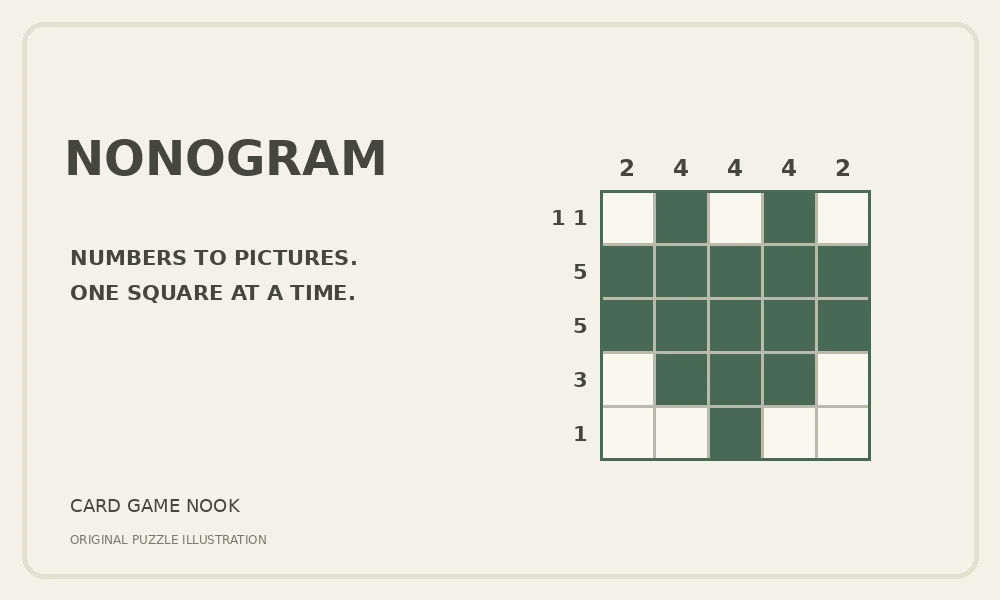
Nonogram: Turn Number Clues into a Hidden Picture
A row of numbers can hide a small picture. Card Game Nook’s Nonogram asks you to discover it by painting the right squares on a grid. Each number describes one uninterrupted painted run; several numbers must appear in their printed order, with at least one blank square between runs. The clues above the columns describe the same picture from the other direction. This is a number-clue logic puzzle rather than a tile-merging version of 2048.
Start with a line that leaves little room for doubt. A 10 beside a ten-square line fills the entire line, while a 0 leaves it entirely blank. A single run of seven in ten squares must cover the middle four squares wherever it begins. Paint that overlap, then use the crossing clues to work outward. With several runs, remember to reserve the separating blanks: clues 4 and 2 need at least seven squares, not six. A painted count alone does not tell you whether those squares are in the right places.
Click a square to paint it, or switch to Cross out to mark a square you know must stay blank. On a mouse, right-click makes the other mark without changing the selected tool. Arrow keys move the selection, Enter paints or clears, and X crosses or clears. Undo reverses a move. Hint can explain a deduction and first point out an incorrect mark; read the explanation instead of treating it as a reason to fill the rest of a line blindly. The menu includes grid size and checking options.
Choose a 5 × 5, 10 × 10 or 15 × 15 board, and work between rows and columns until the painted squares match the hidden picture. Crosses help your reasoning, but the game's winning condition checks the painted picture rather than requiring every blank to carry a cross. New puzzle starts another picture; during an active attempt, an abandonment prompt explains that starting again records the old puzzle as a loss. Keep playing lets you return instead. The board comes from Card Game Nook, with its source credit beside the game.